From First Class to First Name: Building an Adult-Beginner Welcome That Sticks
Photo: Internet Archive Book Images, No restrictions, via Wikimedia Commons
Every local dance scene has the same quiet pipeline problem. A nervous adult signs up for a beginner class, spends 55 minutes trying not to look lost, and never comes back. The studio blames the playlist. The teacher blames the schedule. The real issue is usually simpler: nobody built a welcome that lasts longer than the first combo.
The 20-Minute Rule is a small fix with a big return. For the first three weeks, give adult beginners 20 minutes of low-pressure, before-class time with a host, a buddy, and a clear promise that they do not have to be good yet. It is not a second class. It is a bridge into the room.
Week One: Make the Door Easy
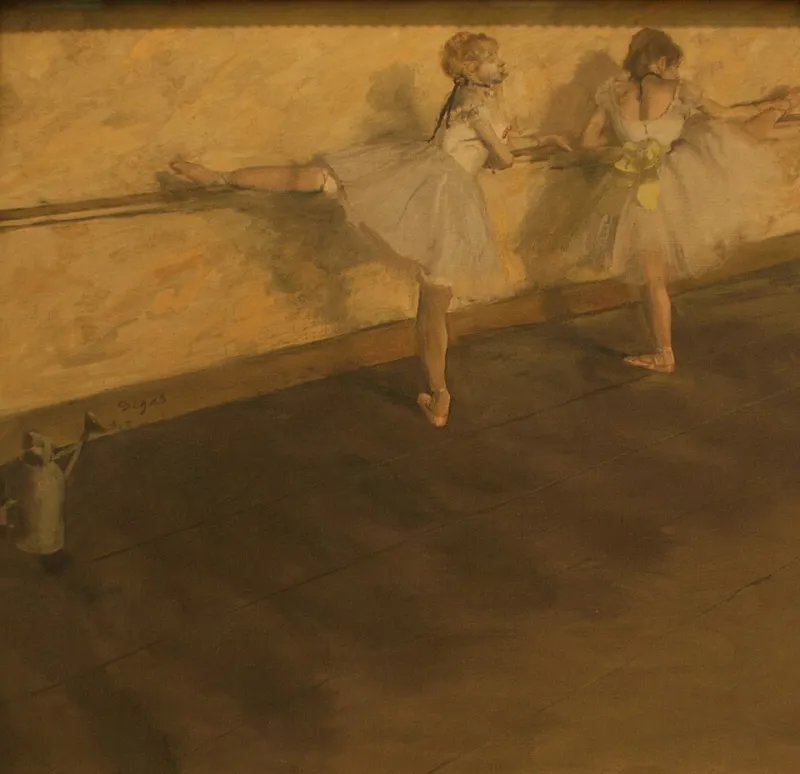
The first class starts at the door, not at the barre. A greeter who knows the beginner schedule is worth more than a wall of inspirational quotes. So is a name tag, a quick tour, and a plain sentence: you can modify everything, and no one is going to ask you to partner up unless you want to.
Show the water fountain. Point out the restroom. Say where to put shoes and bags. Introduce the teacher by name. These are tiny rituals, but they lower the temperature. Adult beginners are often less afraid of dancing badly than they are of breaking an invisible rule.
The 20-Minute Rule, Defined
For the first three weeks, open the studio 20 minutes early for beginners. A teacher or a trained advanced student hosts a mini-orientation. They mark the warm-up slowly. They review three words of vocabulary. They answer questions without making anyone feel behind.
The rule is not about adding more content. It is about removing surprise. A beginner who has already moved through the first eight counts once, at half speed, is a different student when the music starts. Keep the session short, keep it optional, and keep it consistent. Same time, same corner, same friendly face.
A Buddy System Without the Awkward
Pairing a beginner with a regular can go wrong if the regular turns into a correction machine. Set the role clearly. A buddy stands nearby, points out where to find water, and models the option that keeps the combo moving. A buddy does not fix posture, diagnose timing, or offer unsolicited feedback unless the teacher asks.
Rotate buddies so no one feels responsible for a new person forever. Give the buddy a simple script: I am here if you need a landmark. Follow me if you get lost. We reset at the top. That is enough. The goal is safety and familiarity, not a mentorship contract.
Language That Lowers the Temperature
The words teachers use in the first three weeks do a lot of heavy lifting. Replace this is easy with here is the option. Replace you missed the count with we reset from the top. Replace don t worry about getting it wrong with getting lost is part of the process.
Avoid calling attention to mistakes in a way that makes a beginner the example. If a correction is useful for the whole room, frame it as a room-wide note. If it is individual, deliver it quietly. Adult beginners are experts at reading tone. They will remember how a studio made them feel long after they forget the choreography.
Pacing the First Three Weeks
Week one should be two or three moves and a lot of repetition. Week two can add transitions to the same combo. Week three can add styling, but keep the structure familiar. Repeating the same phrase is not lazy teaching. It is how confidence gets built.
A common mistake is treating the first class like a sampler platter. Too many styles, too many counts, too many new faces. Adult beginners need a predictable spine. Keep the warm-up pattern similar, keep the across-the-floor drills short, and give one clear win before the cool-down. The playlist can stay exactly where it is.
Social Touches That Do the Heavy Lifting
A group chat for the beginner cohort can be as simple as a weekly text with the next class time and one reminder: modifications welcome. A post-class coffee once a month gives people a reason to stay for 15 minutes without committing to a whole social calendar. A beginner corner near the mirror gives new students a place to land.
Shout-outs work best when they are specific and low-key. A quick nice recovery in the corner after a stumble can do more than a round of applause for the whole class. Follow up after week two with a short message: glad you came, here is what we are covering next. That is local scene building in its most practical form.
Measure Returns, Not Applause
The number that matters is not how full the first class looks. It is how many beginners come back in week two and week three. Track it. Ask three questions: did you feel welcome, did you know what to do when you got lost, and did the pace work for you? Then adjust the welcome, not the playlist.
The goal is not a packed room of first-timers. It is a familiar face by week three. That is how a local scene grows: one name learned, one buddy assigned, one small promise kept.