Your Eyes Are a Muscle: Turning Dance-Watching Into Real Training
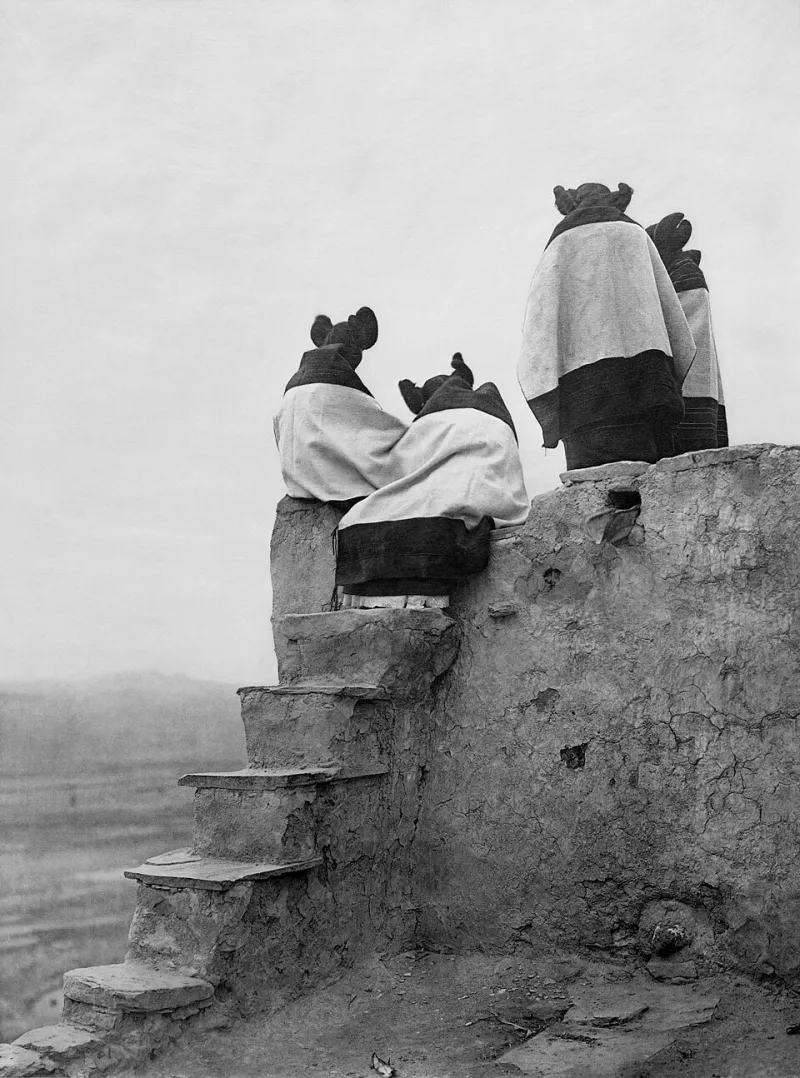
Photo: Edward S. Curtis, Public domain, via Wikimedia Commons
You already spend hours watching dance. There's the clip a friend sends at midnight, the showcase you hit on a Saturday, the person front-left in class who somehow makes the same combination look twice as easy. None of that is wasted time — but it isn't training yet, either. Watching becomes training when you start asking specific questions instead of general ones.
This is the whole idea behind active spectatorship: treating your attention like a skill you can drill. No counts, no mirror, no studio rental. Just a notebook, a seat, and a willingness to stop grading every performance and start reading it.
Why "Was It Good?" Is the Wrong First Question
Most of us default to a thumbs-up or thumbs-down verdict within about ten seconds of a piece starting. It feels efficient. It's also a dead end, because "good" tells you nothing you can use on Tuesday night in class.
The fix is to swap judgment for mechanism. Instead of deciding whether a dancer is strong, ask where the strength is coming from — the heel? The ribs? The way they keep their head level while everything underneath them travels? That question has an answer you can copy. The verdict doesn't.
One more thing worth naming: passive watching is genuinely absorbing. Screens are built to keep your eyes moving, and a good performance will pull you under. That's fine for pleasure. It's terrible for study. Active spectatorship is just the deliberate act of coming back up for air every thirty seconds or so and writing something down.
Four Channels to Watch Instead of the Whole Dancer
Trying to observe everything at once is how you end up observing nothing. Pick a channel per piece.
Weight. Where is the dancer's mass right now, and how do they get it from place to place? Watch feet and hips before you watch arms. Strong dancers rarely look like they're stepping; they look like they're falling on purpose and catching themselves a half-beat later. Notice which leg is doing the catching.
Transitions. Everyone watches the trick. The training is in the two seconds before it. Track the in-between moments — the recovery from a turn, the walk between phrases, the reset after a jump — and ask what the dancer does with them. Do they hold tension? Let the breath drop? Rush? Transitions are where technique leaks, and where choreography either breathes or chokes.
Spatial pattern. Ignore the bodies for a moment and watch the floor plan. Who's traveling and who's rooted? Is the group shape symmetrical or deliberately lopsided? Where does the piece keep returning? This channel is especially useful in ensemble work, where a lot of the design lives in traffic, not individual steps.
Musical decisions. Not "are they on beat" but "what are they choosing to hit." Watch for dancers who land on the syncopation instead of the downbeat, who let a phrase finish after the music does, who treat the vocal line differently than the drum. Choreographers make these calls on purpose; catching them teaches you how to make them yourself.
The Three-Column Notebook
You don't need a system. You need three columns and about four minutes per piece. Draw them however you like — paper, notes app, back of a program.
Column one: What I saw. Concrete, physical, no adjectives about quality. "Weight shifted to the left foot before every turn," not "beautiful turns."
Column two: What it made me feel. This isn't fluff. Emotion is data — if a moment landed, something physical produced it. Note the feeling and then try to attach it to a mechanism you saw.
Column three: What I could steal. One thing. Small enough to try in ten minutes. A transition, a way of entering a phrase, a spatial idea for a trio.
Three columns, one piece, four minutes. That's the whole practice. Do it for a showcase and you'll walk out with more usable material than a month of scrolling.
Five Weeks of Prompts
If you want structure, run these weekly. Each one narrows your attention on purpose.
- Week one: Weight only. Watch one piece and write down every moment you can identify where the dancer's center moved. Ignore arms entirely.
- Week two: Transitions only. Study the space between phrases. Where does the dancer pause? Where do they rush?
- Week three: Space and traffic. Watch a group piece and sketch the floor pattern instead of writing. Arrows are fine.
- Week four: Music. Pick one instrument and follow only that. Note every time a dancer acknowledges it.
- Week five: Steal and test. Take the one thing from column three that's stuck with you and put it into your own warm-up. Report back — to yourself, to a friend, to a teacher.
Where to Do the Work
Local showcases are the best classroom because you can usually talk to the dancers afterward, and a question about transitions lands better in person than in a comment section. Social floors are the other great option — partner and street styles reward close watching because the improvisation is happening live and the decision-making is visible in real time.
Online archives fill the gaps. Company channels, festival archives, and the big free dance collections from places like Jacob's Pillow and the New York Public Library's dance division all host full-length works with enough variety to keep the practice interesting. Pick one piece a week. Same three columns.
The Part Nobody Mentions
Active watching quietly makes you a better community member, too. When you show up to a local showcase with real questions, you end up in a conversation instead of a review. "How did you set up that turn — was it the heel or the ribs?" is a much better opener than "you were amazing," and it's the kind of question that builds the relationships that keep small scenes alive.
So next time you're in the audience, bring a pen. Your eyes are already working. Give them a job.