The Hour Between Class and Carpool: Building an Open Practice Block That Doesn’t Turn Into a Secret Class
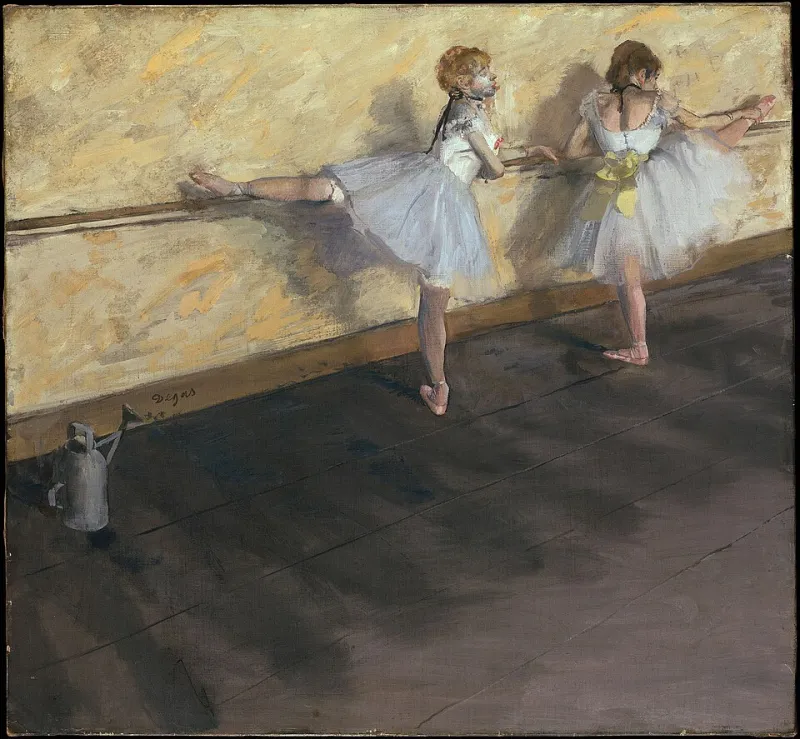
Photo: Edgar Degas, Public domain, via Wikimedia Commons
There is a strange little pocket of time in a lot of studio schedules. Maybe it’s Tuesday at 7:45, after the advanced jazz class clears out but before the adult tap crew arrives. The lights are still on. The floor is swept. And for an hour, nobody has booked the room.
In 2026, more studios are treating that pocket as something worth protecting. Not a class. Not a rehearsal. Not a private lesson with the door propped open. Just an open practice block—a scheduled window when dancers can come in, work on their own stuff, ask a question if they want, and leave when they’re done. Call it a third place with a Marley floor.
The appeal is simple. Class gives you correction. Rehearsal gives you a product. Open floor gives you agency. For adult beginners, it’s a chance to drill a turn sequence without feeling like they’re holding up the room. For pre-professionals, it’s a place to mark choreography and test a phrase before bringing it to a director. For social dancers, it’s reps. For studio owners, it’s a way to make the room feel like a community hub instead of a rental calendar with a lobby attached.
But an open practice block only works if it has a container. Without one, it becomes either a ghost town or a weird free-for-all where one dancer commandeers the speaker and another starts giving unsolicited corrections. Here’s how to build the container without overprogramming the hour.
The case for a room with no agenda
Most dancers do not need another class. They need low-stakes repetition. A lot of dancers are already paying for technique, choreography, and private coaching. What they’re missing is a place to apply it without an audience or a grade. That’s especially true in the US, where studio space can be expensive and living rooms are not exactly built for pirouettes.
An open block also mixes people who would not otherwise meet. The teen comp kid working on a solo and the forty-something returning dancer working on a waltz box step can share a floor without sharing a curriculum. That kind of overlap is good for studio culture. It makes the room feel less like a pipeline and more like a neighborhood.
Set the container, then leave it alone
Start with the boring details. What is the time window? Who can come? Is there a fee? Is there a cap? Is a host on site? What are the rules about filming, food, shoes, and music? Put it on the website, not just in a story that disappears in 24 hours.
Then decide what the block is not. It is not a class with a different name. It is not a chance for teachers to quietly audition students for a piece. It is not a free-for-all for professional coaching. If a dancer wants feedback, they should ask for it. If they do not ask, let them work. That single norm prevents most of the awkwardness.
A host helps. Not a teacher, necessarily—just a person who unlocks the door, sets the tone, and makes sure the playlist does not turn into a hostage situation. The host can answer basic questions, point people toward the schedule, and handle the occasional floor dispute. They do not need to circulate with corrections.
The floor is a commons, not a claim
Floor-sharing etiquette is the real curriculum of an open block. Post a few simple guidelines near the door. Traveling combinations get the center. Stationary work gets the corners or the back. If the room is crowded, split it into lanes. Ask before giving feedback. Ask before filming. Keep bags against the wall, not in the traffic path.
One useful norm is the five-minute reset. Every hour, the host calls a quick pause so dancers can rotate spots, refill water, and reset the music queue. It sounds fussy, but it keeps one person from camping in the center for fifty minutes. It also gives newcomers a natural moment to ask where to stand.
Another norm: headphones are fine for solo work, but keep one ear free if you’re sharing the floor. Dancers need to hear the room. A dropped water bottle, a traveling phrase, or a partner request can come from anywhere. Open practice is not a silent disco.
Music is the hardest part
A shared speaker can turn a peaceful practice hour into a passive-aggressive DJ battle. Solve it before it starts. Some studios use a simple queue: each dancer can add one song, then go to the back. Others run fifteen-minute blocks—one style, one tempo, one vibe. A few hosts curate the first ten minutes to set the energy, then open the queue.
Keep the volume conversational. If dancers have to shout to ask a question, the music is too loud. Watch the lyrics, especially in a studio that hosts youth classes earlier in the day. And do not let one dancer plug in a forty-minute competition mix without checking the room. The point is shared time, not a personal sound bath.
Sign-up norms that keep it open
You do not need a complicated system. A simple RSVP form with a cap works. So does a drop-in fee with a punch card. The key is clarity. If the block is capped at fifteen dancers, say so. If it is first come, first served, say that too. Regulars should not be able to squat on the entire hour just because they know the host.
First-timers deserve a two-minute orientation: where the bathroom is, how the music queue works, which corner is for stationary work, who to ask if something feels off. That little welcome does more for retention than a fancy promo graphic. And if the block is free, consider a suggested donation or a small fee that keeps the lights on. Free is great, but sustainable is better.
Teachers can help by not teaching
Teachers are often the reason an open block exists, and they are also the biggest risk to its identity. The moment a teacher starts circulating with unsolicited notes, the room changes. Dancers who came to experiment start performing. Dancers who came to ask one question stop asking.
So set a clear role. The teacher can host, answer questions, demonstrate a step if asked, and keep an eye on safety. They can offer a ten-minute office-hours corner at the end. They can lend props and post the schedule. What they should not do is turn the hour into a stealth class. If a teacher wants to practice alongside everyone else, great—but they are a peer in that hour, not the authority at the front of the room.
What success looks like
Do not measure an open block by attendance alone. Look for repeat faces. Look for dancers from different classes actually talking to each other. Look for someone asking a question instead of leaving early. Look for the moment when the room gets quiet because everyone is working, not because everyone is bored.
A good open practice hour is a little boring, in the best way. Same time. Same rules. Same host. Same chance to work. That consistency is what turns a gap in the schedule into a place dancers count on. The floor does not need a spotlight. It just needs to be open.