The 90-Second Doorway: A Solo Format for Dancers Who Freeze at “Improvise”
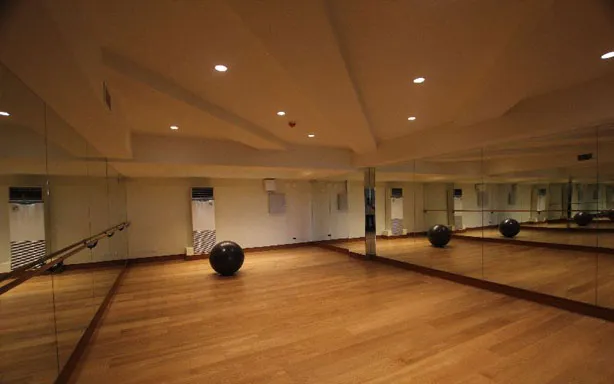
Photo: Rockwell Land, CC BY-SA 4.0, via Wikimedia Commons
There’s a particular kind of silence that follows the words “okay, just improvise.” Maybe you know it. The music starts, everyone else seems to have a plan, and your body suddenly forgets every step it has ever learned. For plenty of dancers, the problem isn’t a lack of skill. It’s the size of the ask. A full song of open-ended movement can feel less like play and more like a pop quiz with witnesses.
That’s where the 90-second solo comes in. Not a showcase. Not a competition. Not a forced spotlight moment. Think of it as a doorway: short enough to walk through before your brain builds a barricade, long enough to actually find something. Studios, drop-in classes, and social dance nights can run this format easily in 2026, and it works across hip-hop, contemporary, house, salsa, and pretty much any style where someone has ever said “feel free.”
Why 90 Seconds Works
A typical song runs three to four minutes. That’s a long time to manage nerves, musicality, spatial awareness, and the fear of looking weird. Ninety seconds is different. It’s roughly the length of a commercial break, a brisk walk around the block, or the time it takes to boil water for tea. It’s short enough that the anxious part of your brain can say, “Fine, I can survive this,” and long enough that you can’t just throw one move and call it a day.
The format also changes the social math. When everyone in the room takes a turn, the solo stops being a performance and becomes a shared practice. The goal is not to impress the room. The goal is to stay in motion, make a choice, and land the plane.
Set the Room Up for Bravery
A few small choices make a big difference.
- Skip the circle if it feels like an audition. A loose semicircle or scattered seating works better than a tight ring of staring faces. If the room is big enough, let people stand or sit at different distances.
- Use one clear “solo area.” Tape a square, mark a corner, or just define the space with a couple of chairs. A boundary helps dancers know where to focus and helps the audience know where to look.
- Keep the music simple. A steady groove, a loop, or even a metronome can be less intimidating than a dramatic song with big emotional cues. For social dance styles, use a familiar tempo so the body has something to lean on.
- Make the timer visible. A phone timer or a small clock on the wall removes the “how long is this?” panic. When the 90 seconds are up, the solo ends—no awkward fade-out required.
- Offer a no-solo option. People can partner up, mirror a friend, or simply watch. The point is voluntary participation, not public exposure.
Give Prompts That Do a Little Work
“Just move” is not a prompt. It’s a trap. Useful prompts give the dancer one thing to solve, not ten things to remember. Keep them concrete and low-stakes.
Try prompts like:
- Start on the floor. End standing.
- Use only three body parts.
- Move as if you’re late but not running.
- Make every shape low, then medium, then high.
- Follow one instrument and ignore the rest.
- Travel from one side of the square to the other twice.
- Repeat one gesture until it changes on its own.
- Dance a conversation with someone who isn’t there.
For social dance nights, prompts can be style-specific without being technical: “lead yourself through a turn,” “find two points of pause,” or “use the corners of the space.” For hip-hop and street styles, a prompt like “treat the beat as a question” can unlock texture without demanding choreography. For contemporary dancers, “let one fall become a slide” gives a clear entry point. The prompt should be a door, not a script.
Teach the Audience How to Watch
A 90-second solo only feels safe if the room knows how to behave. Before the first round, explain the etiquette out loud.
- Watch like a supporter, not a judge. No scoring faces. No whispering critiques.
- Keep applause short and warm. A quick clap or finger snap is enough. Save the hollering for the end of the whole round, if the room wants it.
- Don’t coach from the sidelines. No “turn!” or “use the floor!” unless the format specifically invites it.
- Respect the timer. When 90 seconds ends, the solo ends. The next person can take a breath before starting.
- Offer a silent option. Some rooms prefer snaps or quiet attention. That’s fine. The point is attention without pressure.
Adapt It Across Styles
Hip-Hop and Street Styles
Run the solo as a short cypher turn. Keep the music consistent, let the prompt focus on groove or texture, and remind dancers that freestyle is a practice, not a proof. A 90-second turn is long enough to find a pocket and short enough that no one has to fake inspiration for a full track.
Contemporary and Concert Dance
Use prompts that emphasize weight, breath, and shape. A timer plus a simple score—“floor to standing,” “three pauses,” “one repeated gesture”—gives dancers enough structure to explore without turning the exercise into an impromptu audition. This is especially useful in a studio culture that sometimes equates improvisation with emotional exposure.
Social Dance
For salsa, swing, blues, or fusion nights, the 90-second solo can be a “solo jam” between partner rounds. Borrow the etiquette of a jam circle but dial down the performance energy. Dancers can practice musicality, footwork, and self-leading without needing a partner or a perfect pattern.
Beginners and Mixed-Level Rooms
Let beginners choose a prompt from a short list. Pair them with a buddy who stays nearby, not to direct them, but to be a friendly presence. If someone freezes, the facilitator can offer a simple reset: “Start with your feet. Just step.” That’s not failure. That’s the exercise working.
Keep the Culture Small and Repeatable
The magic of the 90-second solo isn’t in one big breakthrough. It’s in repetition. Run three rounds at the end of class. Add it to a monthly social night. Use it as a warm-up for choreography rehearsals. Over time, dancers stop treating improvisation as a personality trait they either have or don’t. They start treating it as a skill they can practice in tiny doses.
And that’s the real point. Brave doesn’t have to be loud, long, or perfectly musical. Sometimes it’s just ninety seconds of staying in the room, making one choice, and letting the timer do the rest.