Second Act, Same Love: Building a Comeback Class That Doesn’t Feel Remedial
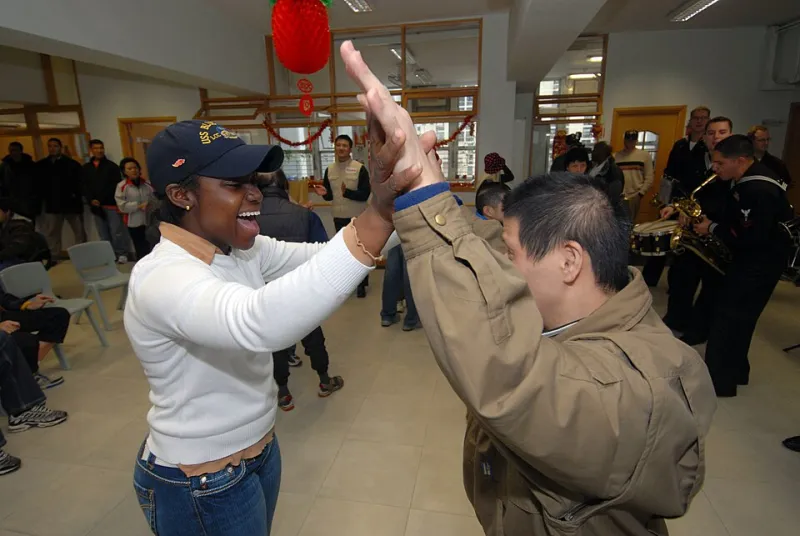
Photo: U.S. Navy photo by Mass Communication Specialist 2nd Class Matthew Bradley, Public domain, via Wikimedia Commons
Every studio owner has heard some version of it in 2026: I used to dance. I miss it. I am not sure I can still do it. That last part is the one that matters. The person on the other end of the email is not a blank slate. They have muscle memory, old recital stories, maybe a knee that clicks, and a quiet fear of walking into a room where everyone else looks twenty-two and already warmed up. A returner class is not a remedial beginner class. It is a bridge back.
The Gap Between Beginner and Back in Shape
Adult returners sit in an awkward middle. They know what a plié is. They remember eight-counts. But their stamina is not what it was, their turnout might be tighter, and the last time they took class, the playlist was different. Treating them like first-timers wastes their history. Treating them like advanced dancers ignores their reality. The sweet spot is a mixed-level comeback session with clear options: a base version of every phrase, a step-up, and a step-down. No one has to announce which one they choose.
The emotional load matters as much as the physical one. Many returners are afraid of injury, sure, but they are also afraid of being the slowest person in the room. Studio culture can ease that fear before the first plié. Put the returner series at a time that does not feel like prime-time showcase rehearsal. Use a studio with a warm floor and decent space. And skip the mirrors-only setup if you can. A room that lets people watch the teacher and each other, not just their own reflection, lowers the stakes.
Design the Room, Not Just the Syllabus
A returner class needs a longer on-ramp than a standard adult beginner class. Start with breath, foot articulation, and slow spinal work. Then add weight transfer before turns, and turns before combinations. Build stamina in short bursts rather than a full ninety-minute push. The first session should end with people feeling pleasantly worked, not wrecked.
Injury risk is real, but it is manageable. Ask for a simple intake note: past injuries, current limitations, anything a teacher should know. Offer modifications without making them sound like punishment. Remind the room that soreness two days later is information, not a badge. And keep the choreography low-impact in week one. Jumps can wait. Floor work can wait. The goal is to leave with confidence intact.
A Six-Week Returner Series That Builds Trust
Here is a sample structure that works for a once-a-week, seventy-five-minute series. Adjust the style to your studio, but keep the arc.
Week 1: Re-entry. Breath, footwork, gentle core, and a simple traveling phrase. No turns. No jumps. End with five minutes of questions and a walk-through of the space.
Week 2: Weight and momentum. Pliés with intention, transfer drills, and a short across-the-floor pattern. Introduce spotting as a concept, not a test.
Week 3: Turns without pressure. Single turns with options. Work on spotting, posture, and the idea that a turn is a balance move, not a magic trick. Add a small combo that includes one turn.
Week 4: Musicality and stamina. A longer phrase with clear counts, then a run-through at half speed and full speed. Talk about pacing and breath. This is where returners start to feel like dancers again.
Week 5: Combination building. Teach a phrase in chunks, then layer it. Let people choose their version. Add a partner share so dancers can watch each other without a recital vibe.
Week 6: Low-stakes showing. Invite a friend or family member. Do a warm-up, run the phrase, and finish with a short informal showing. No costumes. No pressure. Coffee or snacks afterward. The point is closure, not performance.
Market It Without the Fix-Yourself Vibe
The wrong marketing makes returners feel like a project. Avoid language like remedial, out of shape, or getting back to where you were. Try phrases like pick up where you left off, dust off the muscle memory, or the same love, a new pace. Show photos of adults who look like adults. Use testimonials from people who came back after ten years and survived week one. Price it as a series, not a drop-in, so the cohort can gel. And do not call it a bootcamp unless you want people to show up expecting to be yelled at.
Partner with your adult beginner program, but keep the returner series separate. Beginners need a different on-ramp. Returners need a room where they can be honest about what they remember and what they do not.
Cohort Culture: Names, Norms, and a Little Ritual
The fastest way to make a returner class stick is to treat it like a cohort, not a drop-in. Learn names in week one. Set norms: no unsolicited corrections, no comparing bodies, no apologizing for modifying. Start each session with a one-minute check-in: one thing that felt good last week, one thing that felt weird. End with a ritual. Maybe it is a group breath. Maybe it is a stupidly specific handshake. Maybe it is a weekly coffee after class. Rituals turn a six-week series into a place people belong.
In 2026, adult dancers are not looking for a fountain of youth. They are looking for a door back in. Build the returner class around that door, and the comeback corner will fill itself.