Trade You a Groove: The Five-Minute Skill Swap That Gets Every Style in the Same Room

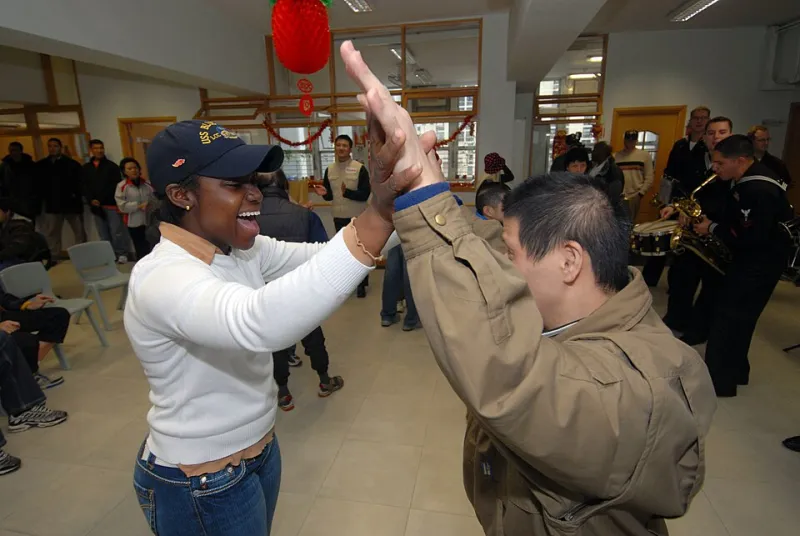
Photo: Evgeny2665, CC0, via Wikimedia Commons
Every scene has its silos. The ballet crowd is at the barre by 6:15, the hip-hop crew claims the back corner with the good speaker, the salsa people show up late and leave later, and the contemporary dancers are somewhere in the hallway talking about a duet. Everybody loves the same studio. Almost nobody trains together.
A skill swap is the cheapest fix I've seen for that. The premise is almost embarrassingly simple: two dancers from different styles get five minutes each to teach the other one useful thing. Then the timer goes off, the room rotates, and it happens again with somebody new. No performance, no showcase, no audience. Just trading.
Why the Five-Minute Cap Does All the Work
Ask a ballet teacher to "share some technique" and you'll get a ninety-minute class with a tendu sequence. Ask them for one thing they can hand off in five minutes and you get something specific — how to keep the shoulders quiet during a port de bras, or why the ribs lead the turn. Constraint forces clarity.
The short window also flattens the room. Nobody has time to establish hierarchy when they're four minutes into a timer. The person who's been dancing eighteen years and the person who started in March are both racing the clock, and that shared scramble is weirdly bonding.
The Run of Show
A 90-minute night is the sweet spot. Long enough to feel like an event, short enough that people still go get tacos after.
- 6:30 — Doors and name tags. Write your first name and the style you're offering. Not your resume. Just "Marcus — house" or "Priya — ballet." This is how the host builds rotations.
- 6:45 — Host demo. Two organizers do a mock swap, badly and on purpose, so everyone sees that clumsy is fine. Ten minutes, tops.
- 6:55 to 7:45 — Four rotations. Each pairing gets ten minutes: five minutes each direction, switching on a loud chime. Three minutes to find your next partner and reset.
- 7:45 — Open floor. Timer off, music on, people freestyle or drill whatever they just learned. This is where the actual cross-pollination happens, and it's never on the schedule.
- 8:05 — Circle up. Thank-yous, next date announcement, group photo if people want one.
- 8:15 — Out. Respect the studio's closing time and you'll get invited back.
Ground Rules That Keep It Generous
Print these on a card at the door. Read them out loud once. They matter more than the schedule.
- Teach one skill, not one routine. A groove, a cue, a transition, a way of hearing a phrase. Choreography is a souvenir; skills are luggage.
- Teach the entry point. Skip the history lecture. Give the other person something they can attempt in the first sixty seconds.
- Ask before you touch. "Can I show you with my hands?" is a complete sentence and takes one second.
- Swap "you're doing it wrong" for "try it this way." Same information, entirely different room temperature.
- The receiver sets the pace. If they want to drill the same thing for four minutes, let them. That's their five minutes too.
- The timer is sacred. It protects the shy people and gently contains the enthusiastic ones. Nobody gets to negotiate extra time, including the host.
- Credit your teachers. If you're passing along something you learned from a specific person, say their name.
Pairings That Actually Land
You don't need a complex algorithm. Rotate loosely by style and let the host nudge.
Ballet and hip-hop. Have the ballet dancer teach the path of the arms through a simple port de bras — where the elbow leads, where the breath sits. In return, the hip-hop dancer teaches bounce, the sink-and-recover that makes a groove read as relaxed instead of marched. Both skills are about weight, and both dancers walk away with a new lens on their own training.
Social dance and contemporary partnering. A salsa or West Coast Swing dancer can hand off frame: how to give weight without gripping, how to signal a direction through the back rather than the arms. The contemporary dancer can return the favor with a safe two-person weight transfer, feet first, no lifting required. This pairing produces the most audible "ohhh" moments in my experience.
Tap and house. Rhythm clarity meets footwork fluency. Tap dancers teach how to make a step sound intentional. House dancers teach how to keep the upper body loose while the feet are busy. Ten minutes and both parties are better at their own style.
Musicality, any two styles. One dancer explains how they count phrases; the other explains what they listen for — the snare, the bassline, the vocal breath. This one works with literally any pairing and is a great default when the host gets stuck.
Setup on a Small Budget
One speaker, one phone running a timer through that speaker so everybody hears it, painter's tape to mark a swap line down the middle of the floor, index cards for name tags, and a sign-in sheet that quietly doubles as a contact list. Skip the mirror wall if you can — face the circle outward and people stop checking their reflection.
Book a space with a forgiving floor and enough room for eight to twelve pairs. Beyond that, the format scales down beautifully. Six people is a fine skill swap. Two people is a fine skill swap.
Snags to Plan For
The show-off. Every scene has one. The one-skill rule and the timer handle this without anyone having to be the bad guy.
The vocabulary gap. Encourage plain language. "Ribs" and "lats" are fine. If a term needs a diagram, describe the feeling instead.
Style imbalance. If you've got eight hip-hop dancers and two ballet dancers, split the larger group so each rotation pairs a ballet dancer with one hip-hop dancer, and let the extras observe or partner up with each other. Nobody sits out.
The letdown after. The night ends and everyone disperses. Fix it with a group chat and a standing date — first Tuesday, every month, rotating host studios. Momentum is a logistics problem, not a motivation problem.
What People Take Home
Not choreography. Not a certificate. Usually it's one cue that quietly rewires how somebody trains — the hip-hop dancer who now thinks about her arms, the ballet dancer who finally understands why his turns feel stiff, the social dancer who discovers she's been gripping her partner's shoulder for six years. Five minutes each way, and the scene gets a little less siloed every month. That's the whole pitch.